Pan-Fried Steak Secrets: Juicy, Tender, & Perfect Sear Every Time
Imagine sinking your teeth into a perfectly cooked steak – a glorious crust giving way to a tender, juicy interior, bursting with rich flavor. While the allure of a summer barbecue is undeniable, the dream of steakhouse-quality beef doesn't have to vanish when the snow flies or when you simply prefer the comfort of your kitchen. Mastering the art of **pan fried steak** on your stovetop is not only achievable but surprisingly straightforward. Forget battling blizzards to unearth a buried grill; with a few simple techniques and the right equipment, you can recreate that restaurant-level experience at home, any day of the year. This comprehensive guide will unlock the secrets to achieving a flawlessly seared, incredibly tender, and wonderfully juicy pan-fried steak.
The Foundation: Selecting Your Perfect Steak Cut
The journey to an unforgettable **pan fried steak** begins long before it hits the hot skillet: with the selection of your beef. Quality truly matters here. Aim for steaks that are between one inch to 1 ½ inches thick. This thickness is crucial as it allows enough time for a beautiful, flavorful crust to develop on the exterior without overcooking the inside, ensuring the interior reaches your desired internal temperature.
Look for cuts with visible marbling – those fine streaks of fat woven throughout the muscle. Marbling is your assurance of rich flavor and incredible tenderness. As the steak cooks, this intramuscular fat renders, infusing the meat with succulence and creating that melt-in-your-mouth texture we all crave.
Here are the top contenders for an exceptional pan-fried experience:
*
Rib-eye: Often considered the king of steaks, the rib-eye is renowned for its generous marbling, which translates into an intensely rich flavor and buttery tenderness. It's a popular choice for good reason.
*
Beef Tenderloin (Filet Mignon): While leaner than a rib-eye, the tenderloin is celebrated for its unparalleled tenderness. Its mild flavor makes it a fantastic canvas for complementary sauces or a simple, elegant seasoning.
*
Strip Loin (New York Strip): Striking a superb balance, the New York Strip offers a good amount of flavor and satisfying tenderness, often with a pleasing fat cap along one edge that renders down beautifully.
While cuts like sirloin, round, or flank steak are delicious, their leaner nature or tougher muscle fibers generally make them better suited for braising, stewing, or slicing thin for stir-fries where their texture can be managed differently. For a truly sublime **pan fried steak**, investing in one of the top three choices will yield the best results. When sourcing, don't hesitate to ask your butcher about their best cuts, and consider options like USDA Prime or Choice for superior quality and marbling.
Mastering the Technique: From Prep to Pan
Achieving that steakhouse-quality sear and juicy interior requires attention to detail through several critical steps. Think of it as a culinary dance where each move contributes to the grand finale.
Pre-Pan Perfection: Setting the Stage
The preparation before cooking is just as vital as the cooking itself. These simple steps ensure your steak is ready to perform its best:
*
Room Temperature is Key: Remove your steak from the refrigerator at least 30 minutes, and ideally up to an hour, before you plan to cook it. This allows the steak to come closer to room temperature, ensuring it cooks more evenly from edge to center. A cold steak hitting a hot pan can lead to an overcooked exterior and an undercooked interior.
*
Pat It Dry: This step cannot be overstated. Use paper towels to thoroughly pat both sides of your steak dry. Excess moisture on the surface will create steam when it hits the hot pan, preventing the formation of that gorgeous, crispy sear we're aiming for. A dry surface is crucial for the Maillard reaction – the chemical process responsible for that savory, browned crust.
*
Season Generously: Before cooking, liberally season your steak with coarse salt (like kosher or sea salt) and freshly cracked black pepper. Don't be shy; much of the seasoning will form part of that delicious crust. Some chefs advocate salting just before cooking, while others prefer salting hours ahead to allow the salt to penetrate deeper. For a quick pan-fry, just before cooking is perfectly fine.
The Searing Secret: Heat and Oil
The actual cooking process of your **pan fried steak** hinges on high heat and the right equipment.
*
Choose Your Weapon: A heavy-bottomed pan is non-negotiable. A cast iron skillet is the undisputed champion for searing steaks due thanks to its exceptional heat retention and even heat distribution. A heavy stainless steel skillet is a close second. Avoid thin, lightweight pans, as they won't maintain consistent heat.
*
Heat the Pan (and Oil) Properly: Place your chosen pan over medium-high to high heat. Allow it to preheat for several minutes until it's smoking slightly. Then, add a high smoke point oil – olive oil is a good choice, but grapeseed, avocado, or canola oil also work wonderfully. The oil should shimmer, indicating it’s hot enough. A properly heated pan ensures an immediate, powerful sear.
*
Lay Down the Steak: Carefully place your seasoned, dry steak into the hot pan. You should hear a satisfying sizzle immediately.
*
Resist the Urge to Flip: Once the steak is in the pan, leave it alone! Avoid the temptation to lift or flip it constantly. For a beautiful, deep brown crust, let it sear undisturbed for 2-4 minutes per side, depending on thickness and your desired doneness. The goal is to develop that rich, caramelized crust through the Maillard reaction. Flipping too early or too often hinders this process.
The Flavor Finish: Butter Basting
For a truly luxurious **pan fried steak**, incorporating butter in the final stages adds incredible depth of flavor.
*
Combine Oil and Butter: Start with oil due to its higher smoke point, preventing the butter from burning too quickly. In the last minute or two of cooking on the second side, add a generous knob of unsalted butter to the pan.
*
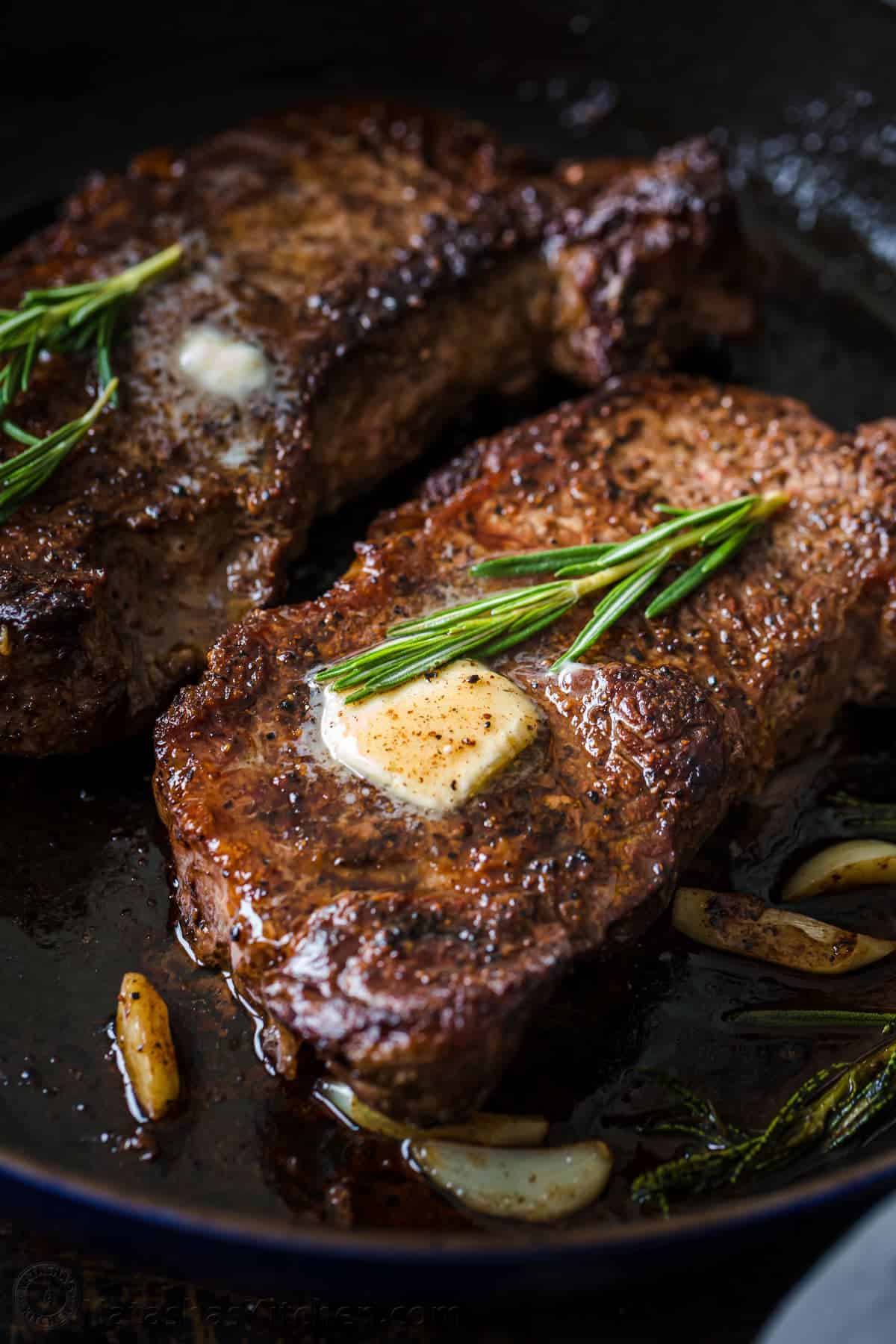
Add Aromatics (Optional but Recommended): For an extra layer of flavor, toss in a few crushed garlic cloves, a sprig of fresh rosemary, or a sprig of thyme with the butter.
*
Baste Away: As the butter melts and foams, tilt the pan slightly and, using a spoon, continuously baste the melted butter and aromatics over the top of the steak. This infuses the steak with rich, nutty flavor and contributes to a beautiful, glossy finish.
The Art of Doneness: Timing and Temperature
Knowing when your steak is perfectly cooked is paramount. While experience helps, a reliable meat thermometer is your best friend for precision, especially when you can't undo an overcooked steak.
Insert the thermometer horizontally into the thickest part of the steak, avoiding any bone or fat. Here’s a guide to internal temperatures:
*
Rare: 125-130ºF (52-54ºC)
*
Medium Rare: 130-140ºF (54-60ºC) - Often considered the ideal for flavor and tenderness.
*
Medium: 140-150ºF (60-66ºC)
*
Medium Well: 150-155ºF (66-68ºC)
*
Well Done: 160+ºF (71+ºC)
Remember that **carryover cooking** will occur. The steak's internal temperature will continue to rise by 5-10 degrees Fahrenheit (3-5 degrees Celsius) after it's removed from the heat. Therefore, pull your steak off the pan when it's 5 degrees below your target temperature. For instance, if you're aiming for medium-rare (135ºF), remove it at 130ºF. This critical step ensures your steak reaches perfection, not overshoots it.
For thicker cuts, especially beef tenderloin that's over 1.5 inches, you might find the exterior searing too quickly while the interior lags. In these cases, a hybrid method works wonders: sear the steak on the stovetop for a few minutes per side to develop that crust, then transfer the pan (if oven-safe) to a preheated oven (around 375-400°F / 190-200°C) to finish cooking to your desired internal temperature. This ensures even cooking without sacrificing the sear.
The Crucial Final Steps: Rest & Slice
You’ve done the hard work, but the steak isn’t ready yet! These last two steps are non-negotiable for a truly tender and juicy result.
*
The Sacred Rest: Once your steak reaches the desired temperature, immediately transfer it to a cutting board and loosely tent it with aluminum foil. Allow it to rest for at least 5-10 minutes (longer for thicker cuts). This resting period is absolutely critical. During cooking, the muscle fibers contract, pushing the juices to the center of the steak. Resting allows these juices to redistribute throughout the meat, ensuring every bite is moist and flavorful. Cutting into it too soon will result in those precious juices spilling out onto your board, leaving you with a drier steak.
*
Slice Against the Grain: After resting, slice your steak against the grain – that is, perpendicular to the direction of the muscle fibers. This shortens the muscle fibers, making each bite significantly more tender and easier to chew. You'll often see the grain running parallel down the length of the steak; slicing across it ensures maximum tenderness.
By following these simple yet powerful secrets, you'll be well on your way to cooking a spectacular **pan fried steak** that rivals any steakhouse. Serve this culinary masterpiece alongside some creamy roasted garlic mashed potatoes or a crisp, fresh salad for a truly unforgettable meal. For more guidance on achieving a flawless finish with various cuts, explore resources like
Master Pan-Fried Ribeye: Best Cuts for Winter Steaks.
In conclusion, the journey to a perfect pan-fried steak is one of understanding key principles and practicing simple techniques. From selecting a quality cut with good marbling to allowing the steak to come to room temperature, achieving a powerful sear, basting with butter, and, crucially, allowing it to rest, each step contributes to the ultimate goal: a juicy, tender, and perfectly seared steak. No matter the weather outside, you now possess the knowledge to create
Easy Pan-Fried Steak: Steakhouse Quality at Home, anytime. So grab your cast iron, choose your favorite cut, and get ready to impress with your stovetop steak expertise!